



Feel steady, confident, and in control again.
Specialized therapy for dizziness, vertigo, and balance challenges in Brisbane and online worldwide.
Why The Dizziness Clinic is Different
Many clinics focus only on physical treatments like vestibular manoeuvres or diagnostic testing. At Dizziness Therapy, we offer something complementary: a mind–body therapeutic approach that supports long-term resilience and symptom re-wiring.
You might already have had medical care. But if dizziness hasn’t resolved, or if anxiety or tension keeps pulling you back into instability that’s where we step in. We help you feel steadier, more confident, and capable of living fully again.
Thorough Assessment
We listen carefully, map your symptoms and triggers, and consider the whole person.
- Symptom mapping
- Stress / sleep / trigger assessment
- Next steps
Evidence-Based Care
Targeted strategies that calm the nervous system, retrain attention, and reduce symptom distress.
- Dizziness reprocessing & strategic psychotherapy
- Mind - Body regulation
- Graded return to valued activities
Compassionate Guidance
We move at your pace with calm, supportive care focused on restoring confidence and capacity.
- Personalised home practices
- Ongoing support
- Step-by-step progress tracking
How Are You Feeling Today?
I’m feeling
Whatever You’re Facing, We’re Here To Support You
Clinical Hypnotherapy
Reprogram nervous system responses, reduce symptom triggers
Strategic Psychotherapy
Shift unhelpful patterns & beliefs keeping dizziness alive
Emotional Support
Process fear, frustration & the emotional load
Breathwork Therapy
Regulate nervous system & reduce stress-driven symptoms
Mind–Body Integration
Harmonise body, brain & environment for steady living
Conditions We Support
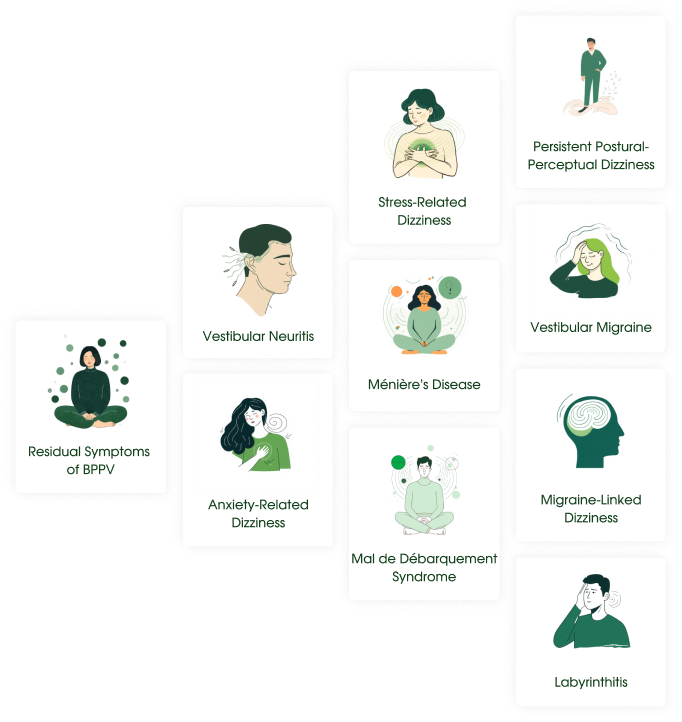
Dizziness can arise from migraines, inner-ear conditions, stress, or nervous system patterns. At The Dizziness Clinic, we support a wide range of balance concerns with therapeutic care that complements medical treatment helping you feel steady, confident, and in control.
We Care About Our Customers Experience Too
Working with Riaz has been absolutely transformational. He is kind, with a heart of gold. He helped me navigate through my childhood trauma and he gave me a road map to healing
Relief from Dizziness
A life-changing experience.
You can feel the change from the first session.
Highly recommended.
Frequently Asked Questions!
What’s the difference between vertigo and dizziness?
Is dizziness dangerous?
Once a clinician has ruled out urgent causes, the sensations are usually uncomfortable, not unsafe. They feel dramatic because the balance/threat system is loud. When a wave hits: pause, feel your feet, pick one steady object to look at, and breathe out longer for 60–90 seconds. Let it pass like a swell in the ocean. Then gently continue what you were doing.
Will panic attacks ruin my progress?
No. They’re intense but temporary—like a thunderstorm. When one hits, name it: “My body alarm is loud, but I’m safe.” Sit or stand with support, look at a still object, and ride the wave with longer exhales. When it settles, do one small, normal action (wash a cup, step outside). That teaches your brain you don’t have to hide from life.
Should I join dizziness forums?
Community can help but choose carefully. Spaces that collect worst-case stories can spike fear and compulsive checking. Look for solution-focused groups where wins are shared, progress is measured in tiny steps, and people talk about living not just symptoms. A practical rule: if you leave the forum more anxious than you entered, unfollow for a month. Replace scrolling with five minutes of skill practice or a text to a supportive friend. Curate your inputs like your diet.
How long does recovery take?
It varies. Some feel meaningful change in weeks, others over months. What predicts faster progress? Consistency over intensity, tiny daily exposures, process focus, and kinder self-talk. What slows it? All-or-nothing goals, constant body-checking, and waiting to “feel ready” before living. Compare only with yesterday-you. If you’re doing the right things, improvement can be sneaky: more normal moments, longer stretches of “forgetting,” fewer meltdowns after busy days. Those are the real markers.