




Our Services

When dizziness doesn’t just “clear up”

If you’ve been feeling off-balance, floaty, rocking, or “not quite right” for weeks or months, you’re not imagining it and you’re not alone. Many people complete medical checks or vestibular treatment and still feel unsteady inside. That lingering sense of wobbliness is often the nervous system staying on high alert, especially after illness, vertigo, migraine, travel, concussion/whiplash, or a stressful season of life.

Our work sits beside your medical care. We help you turn down the alarm, understand what your body is doing, and take small, repeatable steps back into everyday life.

What is Dizziness & Balance Therapy?

It’s a mind–body, trauma-aware approach for long-term dizziness and imbalance. We don’t diagnose, prescribe, or perform vestibular manoeuvres/exercises. Instead, we address the emotional, psychological, and nervous-system patterns that keep symptoms “too loud,” even when you’re medically safe.

You’ll learn how to:

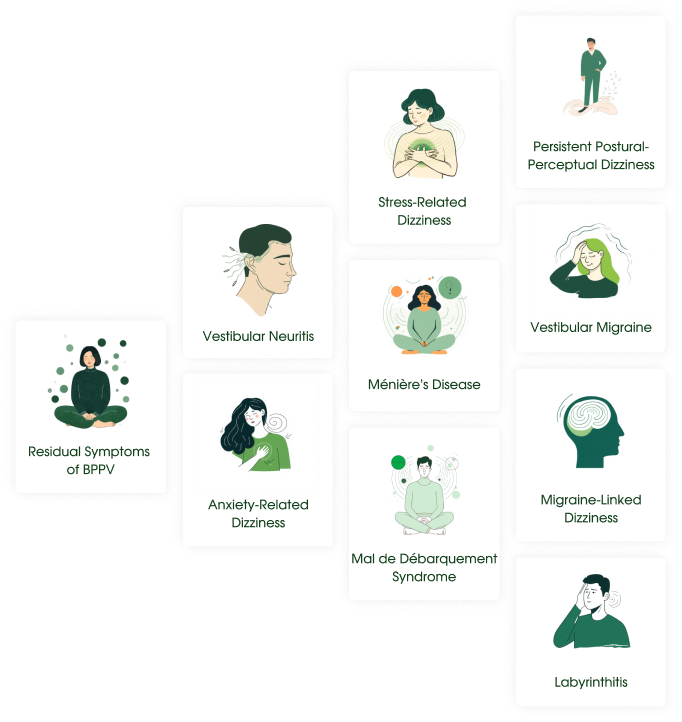
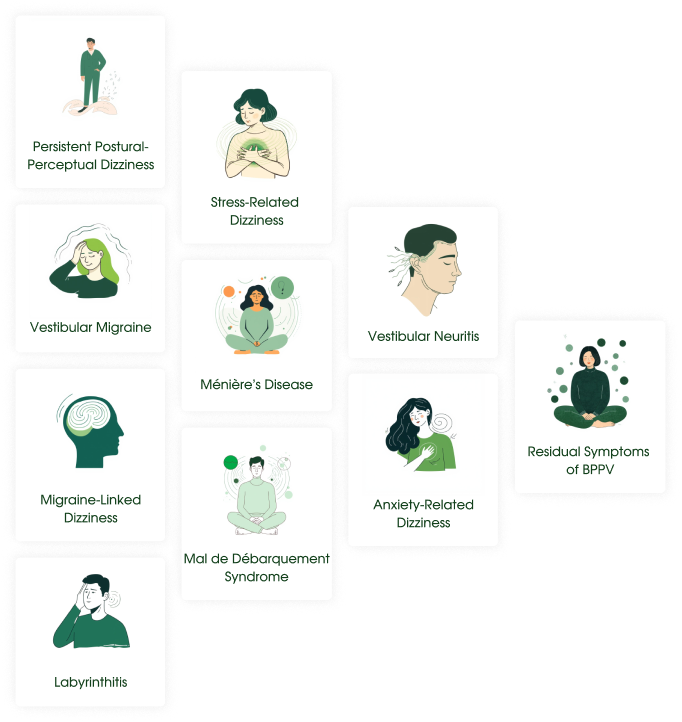
Common conditions where therapy helps

If you haven’t had medical checks yet, start there. We work best alongside your GP/ENT/neurologist/vestibular physio plan.


What people often describe

These experiences are real. They affect confidence and identity not just balance.

How therapy supports long-term dizziness (our approach)

We focus on steady, B-minus consistency tiny wins you can repeat tomorrow. Progress usually comes from many small, compassionate repetitions, not heroic pushes. Your support program may include:

Education and self-understanding

Plain-English explanations of why the brain can over-check motion/visuals (the “smoke alarm for toast” problem), so fear drops and clarity returns.

Psychotherapy and hypnotherapy

Gentle, skills-based work to update protection habits (catastrophising, scanning, bracing), build outcome-independence, and reclaim attention for what matters.

Supportive counselling

A safe place to talk about loss, identity shifts, relationships, work, and hope then set doable plans for hard days and better days.

Breathwork & nervous-system regulation

Practical tools longer exhales, soft-gaze anchors, pacing and wind-down rituals that turn the volume down on symptoms and help your body settle.

Mind–body strategies

Somatic tracking (curious, non-fearful noticing), bite-size exposure to movement/visuals, “micro-wins” in shops/screens/queues, sleep and nutrition anchors, light strength for confidence.

What progress can look like

Progress isn’t a straight line. Spikes become practice windows, not proof you’re back at zero.

Why choose DizzinessTherapy.com

Sessions & booking

In-person in Brisbane

Start with a free 30-minute consult to map your next steps

Online Australia-wide & internationally

We Care About Our Customers Experience Too

Frequently Asked Questions!

Vertigo feels like you or the room is spinning, tilting, or moving when it isn’t like getting off a merry-go-round. Dizziness is a broader word people use for feeling floaty, woozy, light-headed, off-balance, or “walking on a trampoline.” Both experiences are real and very common. After serious causes are ruled out, the sensation is usually your nervous system being over-protective, not broken. Quick helps: steady your gaze on a fixed point, plant your feet hip-width apart, breathe out a bit longer than you breathe in, and let the wave pass without bracing against it.

Once a clinician has ruled out urgent causes, the sensations are usually uncomfortable, not unsafe. They feel dramatic because the balance/threat system is loud. When a wave hits: pause, feel your feet, pick one steady object to look at, and breathe out longer for 60–90 seconds. Let it pass like a swell in the ocean. Then gently continue what you were doing.

No. They’re intense but temporary—like a thunderstorm. When one hits, name it: “My body alarm is loud, but I’m safe.” Sit or stand with support, look at a still object, and ride the wave with longer exhales. When it settles, do one small, normal action (wash a cup, step outside). That teaches your brain you don’t have to hide from life.

Community can help but choose carefully. Spaces that collect worst-case stories can spike fear and compulsive checking. Look for solution-focused groups where wins are shared, progress is measured in tiny steps, and people talk about living not just symptoms. A practical rule: if you leave the forum more anxious than you entered, unfollow for a month. Replace scrolling with five minutes of skill practice or a text to a supportive friend. Curate your inputs like your diet.

It varies. Some feel meaningful change in weeks, others over months. What predicts faster progress? Consistency over intensity, tiny daily exposures, process focus, and kinder self-talk. What slows it? All-or-nothing goals, constant body-checking, and waiting to “feel ready” before living. Compare only with yesterday-you. If you’re doing the right things, improvement can be sneaky: more normal moments, longer stretches of “forgetting,” fewer meltdowns after busy days. Those are the real markers.

Book a Session

If you’ve experiencing chronic dizziness and anxiety, we are here to help. Schedule your FREE Initial Consultation.

Disclaimer

The Dizziness Clinic – Brisbane provides hypnotherapy, psychotherapy, counselling, and breathwork as supportive therapies. We do not provide medical diagnosis or repositioning manoeuvres. Our services are designed to complement medical care, not replace it.